Logo

Build India Group

Creating Good Citizenry

Build India Group

Let us cultivate good citizenry for a stronger, ethical and responsible India.

Unity

Our Mission

To inspire and enable every citizen of India — especially youth — to uphold and practice the values enshrined in Article 51A of the Constitution, incorporated via 42nd amendment in 1976. This Article acts as a reminder that citizenship involves responsibilities as well as rights. It encourages ethical behaviour and contribution to the nations progress.

As owners of this great nation, citizens must discharge their duties to build, sustain, and lead India towards excellence

Through publications, programs, workshops, and community outreach, we promote responsible citizenship and nation-building. The program of activities includes education on Fundamental Duties, civic responsibilities, mass rejection of violence, understanding the importance of health – healthy eating, exercise, and sleep. Centred around a Pledge committing the citizen to place the Nation first.

The Pledge

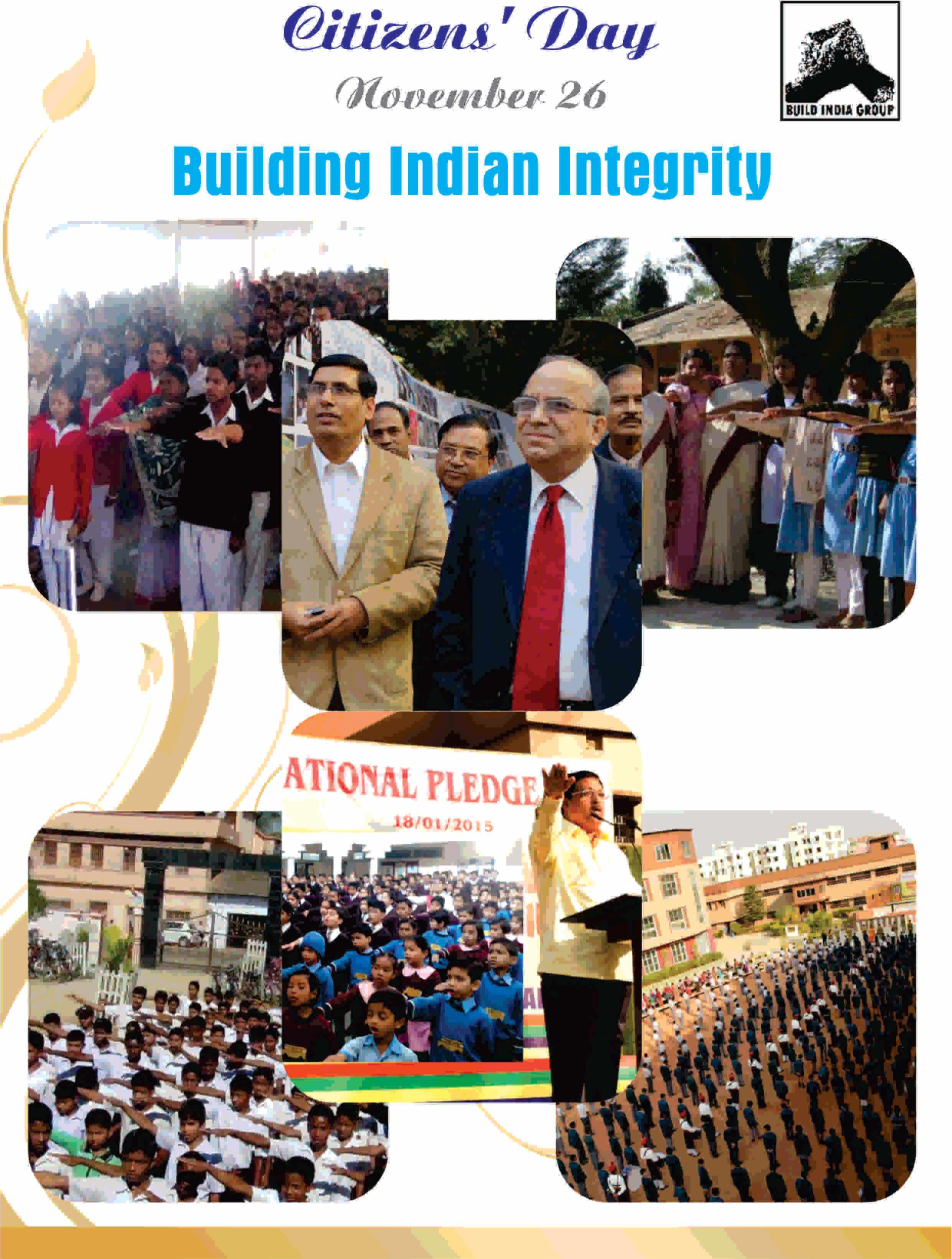
In our mission to foster good citizenry, we created a Citizen's Pledge in 22 languages, to be used in schools and colleges, by students. By taking this pledge, a student commits to the nation to be a good citizen, and to work in all honesty and sincerity in the interest of the nation. Always keeping the interest of the nation first.

This Pledge created by Build India Group, to replace the earlier 'national pledge', acknowledges the need for the student to not only be a good human but also to commit to the Fundamental Duties as per the 42nd Amendment, always working in the nation's interest.

The Pledge has been part of the annual integrity building exercise initially in the third week of January each year. Since 2015, it is celebrated on 26th November – Constitution Day.

Students write the pledge in their mother tongue, obtain signatures from their parents, recite it in unison in a charged school ambience and submit it to the school authority.

The Pledge, in all 22 pledges has already been distributed to educational institutions across the country. This pledge is central to Constitution Day ceremonies, performed on 26th November each year.

It is a matter of pride that many institutions have adopted the pledge as part of their morning prayers, and more and more are doing so. We hope, with your help, that this becomes part of the morning prayer in all educational institutions.

The Pledge

Morning Prayer Chennai – Tamil Nadu

Morning Prayer Chennai – Tamil Nadu

Morning Prayer Odisha School

Constitution Day

In 2016, Build India Group met Sri Prakash Javadekar to demand Constitution Day be celebrated with fundamental duties as the theme. We had demanded that November 26th be celebrated as Citizen's Day and not Constitution Day. However the Prime Minister chose to announce a discussion in both houses of Parliament, over two days 30th Nov and 1st December to discuss the Constitution. 26th November was formally named Samvidhan Divas i.e. Constitution Day. This is the day the Constitution was adopted by the Constituent Assembly.

Our late Patron Shri A V Swamy introduced Build India Group’s work in the Rajya Sabha.

Fundamental Duties

On 28th Nov 2016, HRD Minister Shri Prakash Javadekar endorsed integrity-building exercises across educational institutions using Build India Group’s pledge. The instructions to the educational institutions appeared in Hindustan Times and Times of India. All educational Institutions were asked to celebrate Constitution Day focussing their activity content on Fundamental Duties as enshrined in the Constitution. Activities such as education on civic responsibilities, rejecting violence on all forms, caring for the environment, to be part of the pledge ceremony. These figure in the program envisaged on Fundamental Duties like essays. debates, speeches etc to be introduced by educational institutions.

Akyatan – Symphony of Harmony

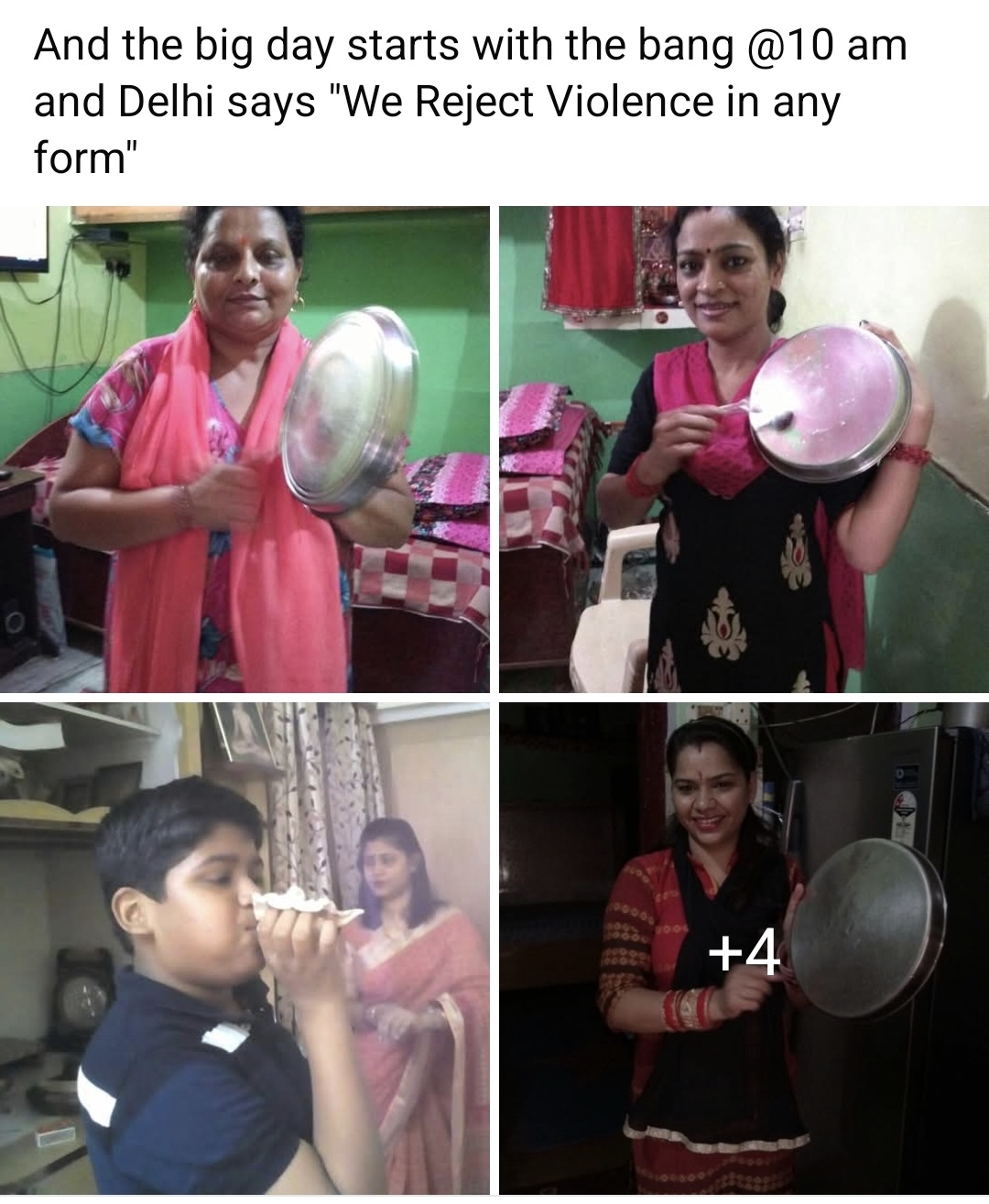
To bolster the feeling of a national integration, promote good citizenry and earmark the Constitution Day on November 26, in a one-of-its kind campaign, Build India Group (BIG), devised a unique country-wide programme called ‘Symphony of Harmony’ (AIKYATAAN).

In this programme, people express their solidarity to fight violence of all kinds through a symphony by use of conchs, drums, musical instruments or even banging a silver platter at a fixed time. The national integration meant that people should have an emotional bonding with the country.

Nation and country are two different constructs; country is a physical entity while nation is an emotional feeling, Prior to Independence India was neither a country nor a nation. Our efforts are to strengthen India as a physical entity as well as a nation.

BIG has devised a three pronged strategy to reach out to children across the country, to involve religious institution and to take the help of policy makers and the government so that every section of society is engaged in this herculean effort to promote the concept of national integration. Involving children, so that they are able to imbibe the concept of unity of India.

The role of religious institutions is also very important because the aim of all religions is to promote the concept of good citizenry and good citizenry is the answer to corruption and terrorism. The drive to work for the country comes from the heart.

This innovative idea for mass participation, by Build India Group, found favour with the PM who adopted it for nationwide participation by citizens, during Covid, for thanking frontline workers. This was later adopted internationally.

Akyatan

Haritbol

Plants play a critical role in the very survival of humanity. They produce oxygen through photosynthesis, provide food and shelter for animals, food, medicine, fuel and raw material for humans. They provide habitat for countless organism supporting biodiversity.

Plants also play a key role in the environment by absorbing carbon dioxide, and help filter harmful substances from air, cleaning the air. Plants play a crucial role in the carbon cycle and maintain ecosystem balance. Plant roots bind the soil, preventing soil erosion helping to keep the soil fertile. Plants contribute towards reducing temperatures and reducing global warming.

It is important that our young begin to understand the importance of nurturing plants, planting more saplings to grow more plants – takes years for these to develop into large healthy plants, needed to sustain a healthy environment for our future generations.

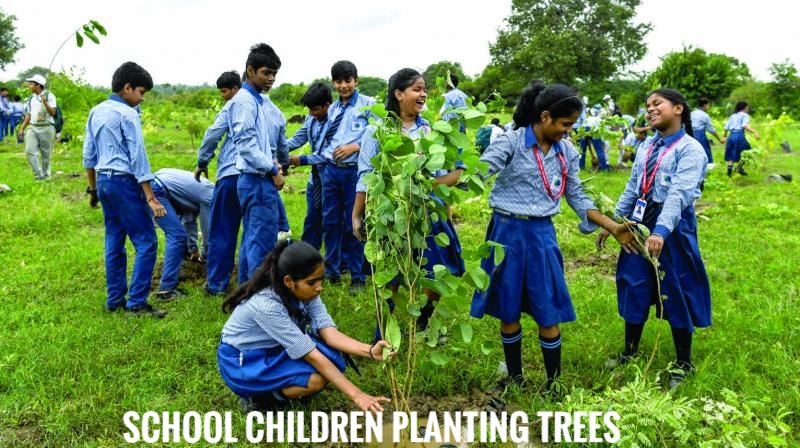
Part of the Constitution Day celebrations, students plant saplings, tie a thread around trees making a commitment to water it, look after it.

This initiative has seen widespread adoption during Pledge Festivals across schools.

childrern planting tree saplings hug a tree

My Health Is My Country's Wealth

Healthy citizens are the foundation of a wealthy nation because they drive economic productivity through a strong workforce, reduce healthcare burdens, and foster overall societal development, creating a virtuous cycle where wealth enables better health, and better health generates more wealth through innovation, investment, and sustained contribution. A nation's true wealth lies in its people's well-being, encompassing physical, mental, and social health, which allows for focused economic progress rather than diversion of resources to disease management.

How healthy citizens build a wealthy nation: Increased Productivity: Healthy individuals are more energetic, efficient, and less absent from work, directly boosting economic output.

Stronger Workforce: A healthy population forms a robust labor force, essential for industries, innovation, and economic growth.

Reduced Healthcare Costs: Fewer illnesses mean lower government spending on treatment, freeing up funds for development in other sectors like education and infrastructure.

Investment Attraction: Nations with healthy, productive populations are more attractive to foreign investment.

Social Stability: Improved health, alongside education, contributes to a better quality of life, fostering social harmony and stability, which are crucial for sustained wealth.

The cycle of health and wealth: Wealthy nations invest in health: Affluent countries can afford advanced healthcare systems, preventive care, and health education, ensuring their citizens remain healthy. Healthy citizens drive wealth: This investment pays dividends as the healthier populace contributes more to the economy, creating more wealth.

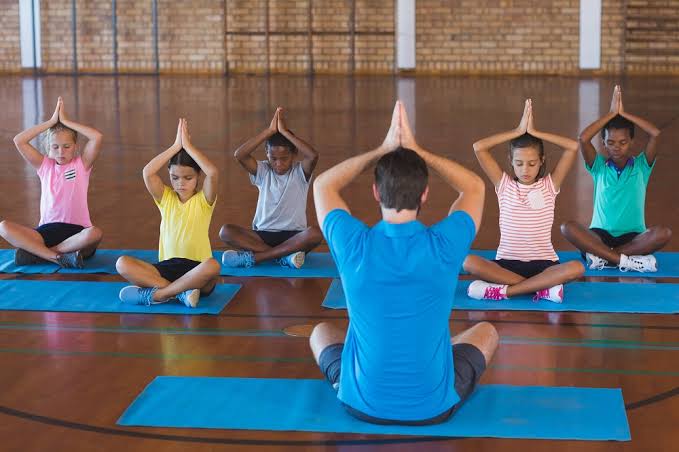
Recognising the importance of this, BIG includes importance of civic responsibilities for a healthy and clean environment, in its agenda to schools. No defacation in the open has been a government initiative, which we support. We emphasise on the need to keep the environment clean for good health, we discourage litter in public areas (it should be placed in containers for recycling). We encourage healthy eating habits. We emphasise on the importance of daily exercise as part of the morning ritual. We encourage development of participatory sports for fostering teamwork – sports and games are an essential part of child development.

Healthy Eating

Healthy Habits

Healthy Food

Healthy Food

Team Sport

Team Sport

Yoga and Exercise

Yoga & Exercise